
A good fence does far more than mark a boundary. It adds privacy, improves security, defines your space and lifts the overall appearance of your property. But here in Durban, choosing a fence is not quite as simple as picking a style you like. Our warm, humid, coastal climate places real demands on outdoor materials — and the fence that thrives in a dry inland town can fail surprisingly fast along the KwaZulu-Natal coast.
If you are planning a fence for a home, smallholding, farm or commercial property, this guide walks you through how to choose the right fencing in Durban: which materials last, how the local climate and soil affect your choices, the main fencing types to consider, and whether to install it yourself or bring in a professional team.
Why Durban’s Climate Changes the Fencing Equation
Durban’s environment is tough on fencing. The combination of high humidity, salt-laden coastal air, strong sun and occasional heavy rainfall works steadily against materials that are not built for it.
Each common fencing material reacts differently:
- Untreated timber absorbs moisture, attracts termites and borers, and can rot or warp within just a few seasons.
- Plastic can become brittle under constant sun exposure.
- Metal can corrode over time in salty coastal air, especially if it is not properly galvanised.
- Properly treated timber performs exceptionally well — it resists rot, insect damage, moisture absorption and fungal growth.
This is why, in coastal KwaZulu-Natal, choosing the right material is not a cosmetic decision — it directly determines how many years you get out of your fence.

Why Treated Timber Works So Well in Durban
Treated timber remains one of the most trusted and practical fencing solutions across Durban and the greater KZN region. It offers a balance that few other materials match: strength, adaptability and a natural look that suits both suburban homes and rural properties.
Properly treated timber fencing provides:
- Strong, stable boundary structures
- Resistance to moisture and insect damage
- A natural appearance that suits residential and rural settings
- Flexibility in design and layout
The key word is treated. At Durban Poles, all our treated poles are pressure-treated with CCA (Copper, Chrome and Arsenic) and are SABS approved. They are treated to H4 level per SAWPA standards — suitable for poles in ground contact and exposed to occasional moisture, which is exactly what fencing poles face. The treatment penetrates at least 13mm into the wood, and each pole is fitted with anti-split plates and carries the SABS stamp. In Durban’s humid environment, using treated timber is not optional — it is essential.
The Main Types of Fencing to Consider in Durban
There is no single “best” fence — the right choice depends on what you are trying to achieve. Here are the main options and where each one shines.
Classic Picket Fencing
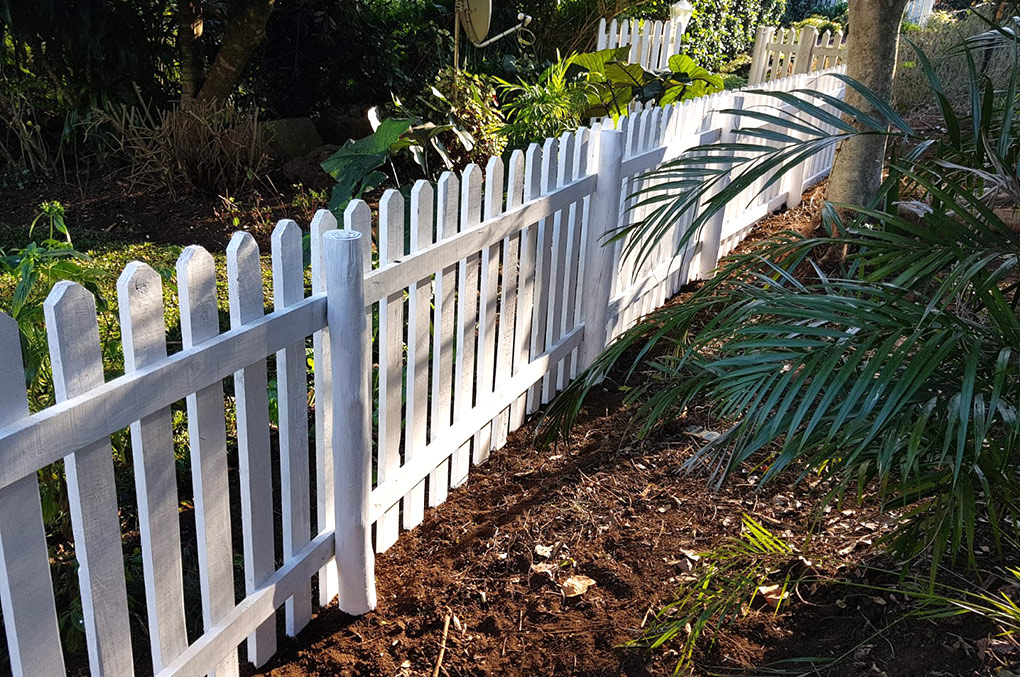
Timeless and elegant, picket fencing is perfect for gardens, front yards, decorative borders and around pools. It retains a charming, suburban character and can be painted or sealed to suit your home.
Slatted Fencing
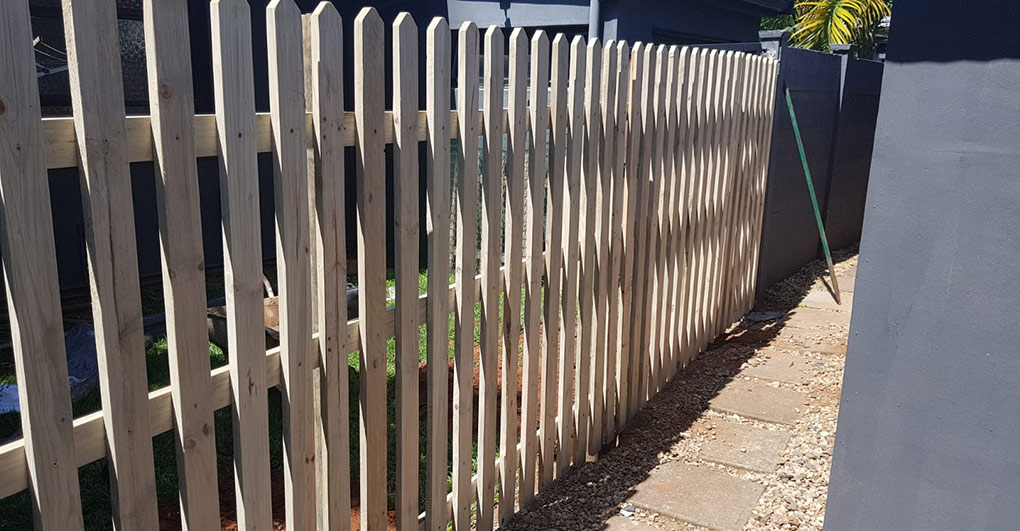
A more modern choice that offers both privacy and airflow — ideal for contemporary spaces where you want screening without completely blocking the breeze.
Post and Rail Fencing
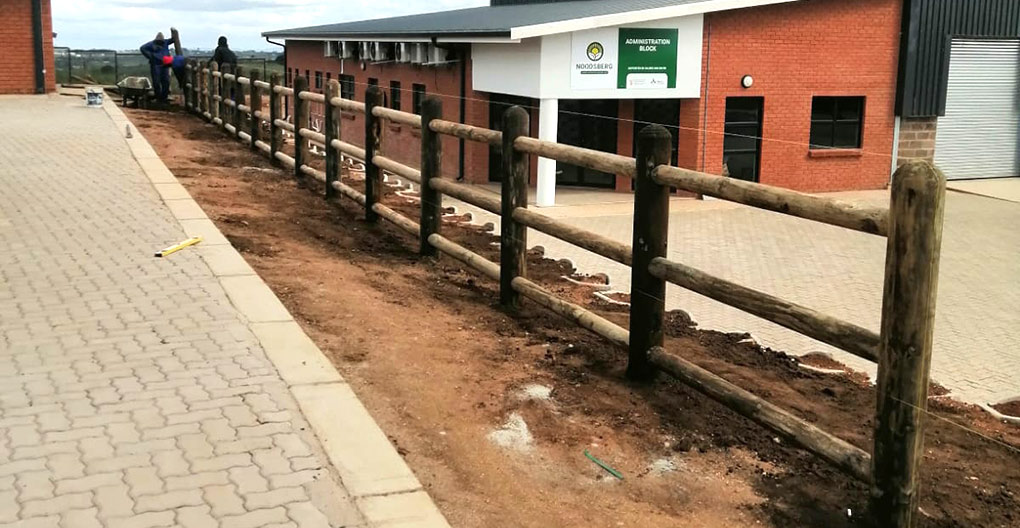
A rustic, open design that suits larger properties, farms and landscaping features. It is excellent for enclosing livestock, defining property lines or simply adding a classic look. You can read more about post and rail fencing options and sizes.
Louvre-Style and Vertical Panel Fencing
Great for privacy, wind screening and stylish separation between spaces.
Weldmesh Fencing
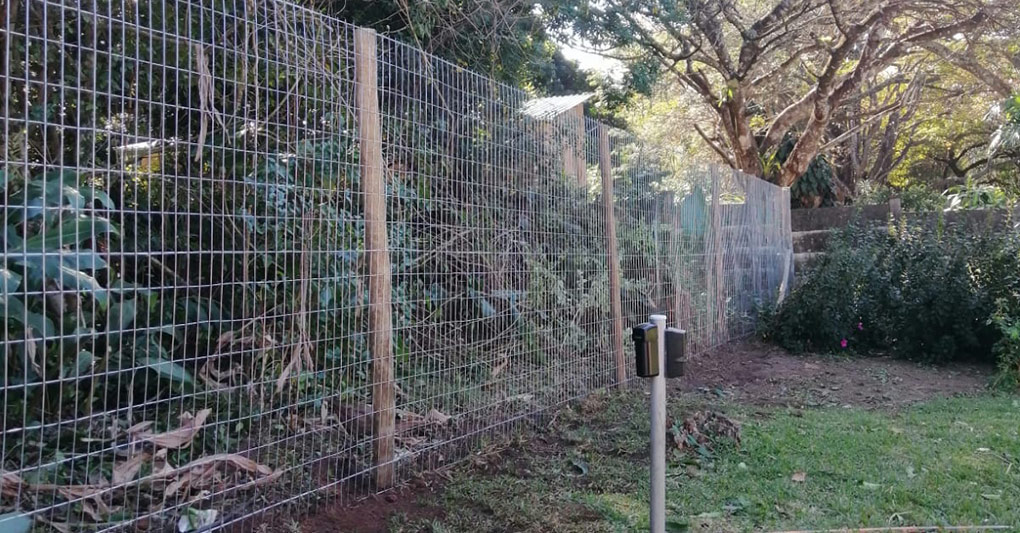
Where security and visibility both matter — around construction sites, smallholdings and gardens — weldmesh fencing is a strong, practical option. In Durban specifically, we recommend fully galvanised weldmesh because of the high corrosion factor in coastal air.
For decorative boundaries and edging, our range of timber fencing and garden edging covers most residential needs, with custom designs available too.
Getting the Installation Right: Spacing, Depth and Drainage
Even the best materials will fail if the fence is not installed correctly. Installing a fence is not simply about placing posts in the ground — it requires planning, correct spacing and solid foundations.
A few practical guidelines that apply to most fencing in Durban:
- Pole spacing generally ranges between 2m and 3m, depending on the fencing material. Closer spacing is recommended for weldmesh and lighter materials to improve stability.
- Pole depth matters: as a rule of thumb, fencing poles around 2.4m high are set roughly 600mm into the ground, giving a finished fence height of around 1.8m.
- For weldmesh specifically, support poles should be a maximum of 4m apart and buried 600mm deep for stability.
- Drainage is critical. When water collects at the base of timber posts, it weakens the structure over time. In fact, the bottom of weldmesh support poles should not be concreted — the moisture must be able to drain back into the soil. Poles are best installed with soil stamped firmly around them with a concrete mix.
Durban’s soil also varies from sandy to loamy to compacted clay, sometimes within the same property, and many sites have slight slopes. All of this influences how deep posts must be set — which is why a proper site assessment makes such a difference to the final result.

DIY Fencing vs Professional Installation
Not every project needs a professional team — but knowing which route suits your job will save you time, money and frustration.
When DIY Makes Sense
For smaller, straightforward fences, doing it yourself is very achievable. The success of a DIY fence depends largely on the quality of materials used — even skilled builders struggle if the timber is poorly treated or the poles are inconsistent in size. We supply everything you need for DIY fencing supplies: properly treated poles, strong rails and boards, weldmesh, quality nails, ringshank nails, bracing straps, Gumbou brackets and Waxol. Accurate measuring and levelling, the right post depth, and sensible spacing are what separate a fence that lasts from one that leans.
When to Call in the Professionals
For larger or more complex installations — boundary walls, estates, farms, security fencing or anything on difficult terrain — professional installation is usually the smarter choice. It ensures the fence is properly aligned, level, and securely installed for long-term durability, and it avoids the costly mistakes that often come with DIY on bigger jobs.
At Durban Poles, we offer professional fencing installation in Durban for projects of every size, from a small garden fence to a large housing-estate development. As both an installer and a wholesaler, we are able to source materials directly and pass the savings on — so you get quality materials at competitive prices. Our approach is to provide a quotation first, followed by a site visit, so the solution is matched to your budget, location and specific needs.
Looking After Your Fence
A timber fence is an investment, and with a little care it can last many years. Simple maintenance goes a long way in the Durban climate:
- Inspect posts and rails annually
- Tighten any loose fasteners
- Clean off dirt or algae build-up
- Reapply protective sealant when needed
- Keep vegetation trimmed away from the fence line to reduce moisture retention
Fencing Across the Greater Durban Area
The right local knowledge matters, because soil types and environmental exposure differ slightly from suburb to suburb. We supply and install fencing throughout the greater Durban region, including Durban Central, Westville, Hillcrest, Kloof, Pinetown, Umhlanga, the Upper Highway area, Ballito and surrounding areas.
Choosing the Right Fencing Partner
When selecting a provider for fencing in Durban, experience and material quality should be your top priorities. Look for knowledge of treated timber products, clear and transparent quoting, proper installation methods, experience working in local soil conditions, and reliable communication. A strong fence begins with quality materials and skilled workmanship — cutting corners early almost always leads to costly repairs later.
Whether you are securing a property, adding privacy, enclosing livestock or simply enhancing your outdoor space, the combination of treated timber and proper installation is what delivers long-term performance in KwaZulu-Natal’s coastal climate.
Have more questions? Browse our fencing FAQs for quick answers, or get a quote and our team will help you plan the right fence for your property.
Planning a fencing project?
From picket fencing and garden edging to post and rail, we supply DIY materials and handle full installations across KwaZulu-Natal. All our timber is SABS and ISO 9001 approved.