
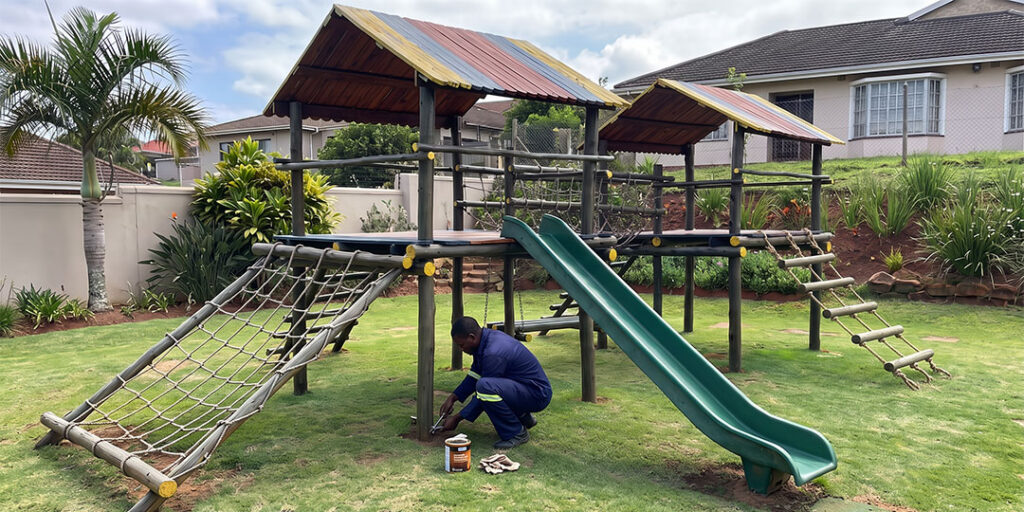
A simple seasonal routine that keeps a wooden jungle gym safe, solid and looking good for years
A wooden jungle gym is built to take years of climbing, sliding and swinging, but like any outdoor timber structure it lasts longest when it gets a little attention. Good jungle gym maintenance is not complicated or expensive. A few checks every season, a clean now and then and a protective coat when the timber needs it will keep the structure safe for the children using it and protect the investment you have made. This guide covers what to check, how often, and what Durban’s humid coastal climate means for wooden jungle gyms.
Contact Durban Poles for jungle gym maintenance advice, replacement parts and Waxol – tell us what you are seeing and we’ll help you sort it out.
Why jungle gym maintenance matters in Durban
Durban’s weather is great for outdoor play and hard on outdoor materials. Summer brings heavy rain and high humidity, winter brings strong sun, and homes closer to the coast also deal with salt in the air. Over time that combination dries out timber surfaces, loosens fittings and wears ropes and nets.
The good news is that a properly built jungle gym starts with a big advantage. Every Durban Poles structure uses SABS-approved, CCA-treated timber poles treated to H4 level, which protects the wood against rot and insects from the inside. Maintenance is about looking after the surface, the fittings and the moving parts, so that the treated timber underneath can do its job.
A seasonal jungle gym maintenance checklist
Set aside half an hour at the start of each season, or before the school holidays when the jungle gym gets the most use, and work through the structure from the ground up:
- Bolts and fittings. Check every bolt, screw and bracket. Timber naturally moves as it swells in wet weather and dries in the sun, which can loosen fittings over time. Tighten anything that has worked loose and replace any fittings that are badly rusted.
- Poles at ground level. Look at the base of each upright pole. The structure should stand firm with no rocking. Keep soil, mulch and grass cuttings from piling up against the poles so moisture can drain away.
- Platforms and rungs. Walk the decks and test each ladder rung by hand. Look for loose slats, rough patches or splinters, and sand down anything that could catch small hands.
- Ropes and nets. Pull firmly on cargo nets, rope ladders and swing ropes. Check for fraying, thinning or knots that have slipped. Ropes are the parts most likely to need replacing before the timber does.
- Slides and roofs. Make sure slide fixings are tight and the bottom of the slide still has a clear, soft run-off. Check roof sheets or timber roofs for loose screws after a windy spell.
- The ground underneath. Top up bark mulch or patch worn lawn under the slide, swings and net. A soft landing surface is one of the most important safety features of any play area.
Cleaning and sealing a wooden jungle gym
Dirt, bird droppings and mildew build up faster in a humid climate, especially on shaded platforms. A scrub with a stiff brush and warm soapy water, followed by a rinse with the hose, is usually enough. Avoid high-pressure washers on the timber, as they can lift the grain and leave the surface rough.
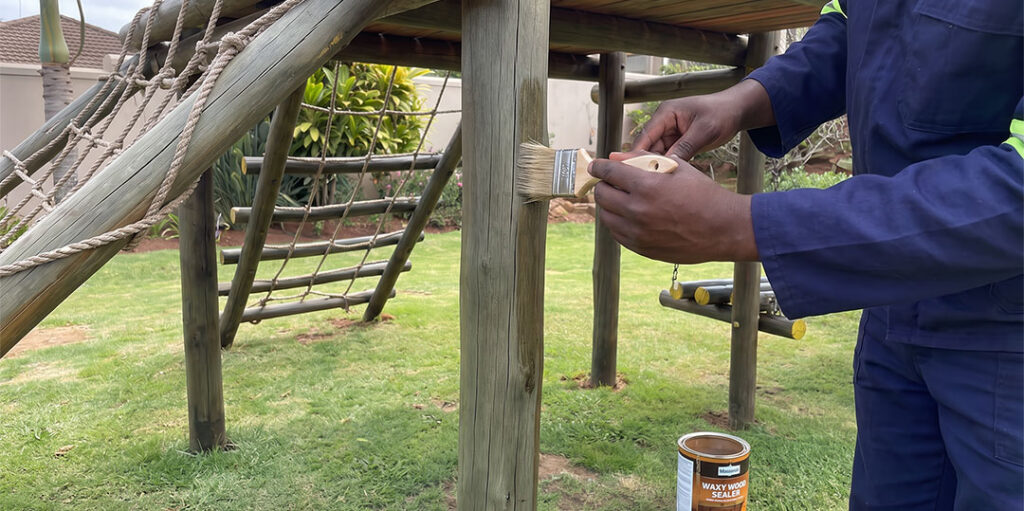
Once the wood is clean and completely dry, a protective coating helps it shed water and resist sun bleaching. We stock Waxol, a timber sealing wax that penetrates the wood and helps prevent water getting in. It is not a preservative, so it does not replace the CCA treatment, but it does help keep the surface in good condition. Apply it with a brush on a dry day, working into the cracks and end grain of the poles. Most families find that recoating every year or two keeps the jungle gym looking its best.
Small cracks in jungle gym poles are normal
One of the most common questions we get is about cracks along the length of the poles. Fine cracks, called checks, are a natural part of how round timber dries and moves, and they do not mean the pole is weak or rotting. The CCA treatment penetrates at least 13mm into the wood, so the protection goes deeper than the surface cracks.
What you should look out for is different: a pole that feels soft or spongy when you press a screwdriver into it, a crack wide enough to trap a finger, or splintering around a bolt hole. If you notice any of those, get in touch and we’ll advise whether a pole or component needs replacing.
Jungle gym maintenance as children grow
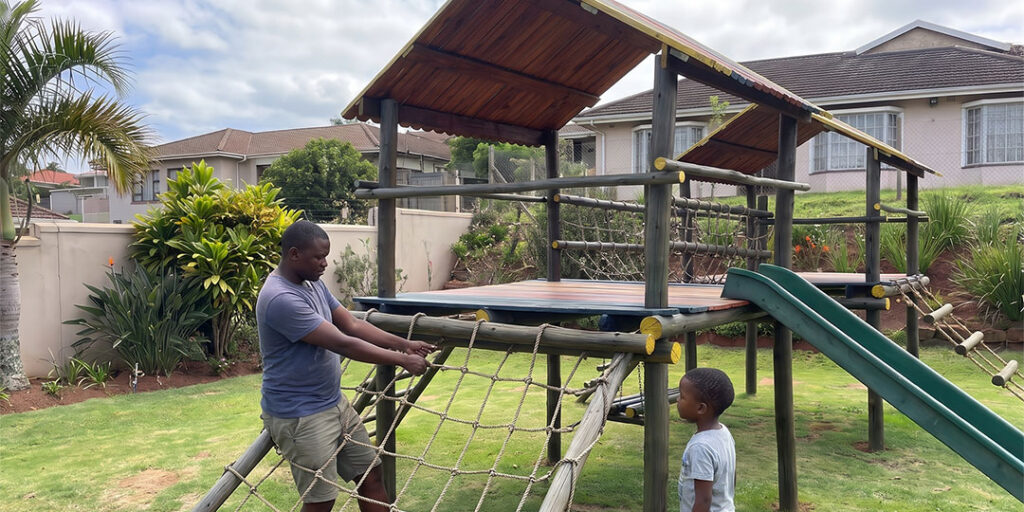
A jungle gym that suited a three-year-old may need changes by the time they are eight. Maintenance time is a good moment to think about whether the play area still fits the children using it. Older children may be ready for monkey bars, a climbing wall or a rope ladder, while younger siblings may need lower rungs or a gentler slide. Because our jungle gyms are custom built, parts can often be added or swapped rather than replacing the whole structure. When children outgrow the jungle gym entirely, a timber obstacle course is another option.
When to call in the professionals
Most jungle gym maintenance can be done by parents with a spanner, a brush and an afternoon. It is worth calling us if a pole is damaged, the structure has started to lean, a platform needs rebuilding or you want to extend the jungle gym. Our team has over 20 years of experience building jungle gyms across Durban and KwaZulu-Natal, and our jungle gym FAQs and guide to jungle gym installation cover more about how our structures are built. For more on how treated timber is protected, the South African Wood Preservers Association explains the treatment classes.
Keep your jungle gym ready for play
A little regular jungle gym maintenance goes a long way. Check the fittings, look after the ropes, keep the timber clean and sealed, and your wooden jungle gym will give your family years of safe outdoor play.
Contact Durban Poles for jungle gym maintenance, repairs and upgrades – get in touch today and we’ll help you keep your play area in top shape.
Thinking about getting a jungle gym?
We build and install wooden jungle gyms and obstacle courses for homes, schools and estates in and around Durban. All our timber is SABS and ISO 9001 approved.